Akela Growth Playbook
Where Entrepreneurs and Business Owners learn to scale with AI, automation, and proven marketing systems.
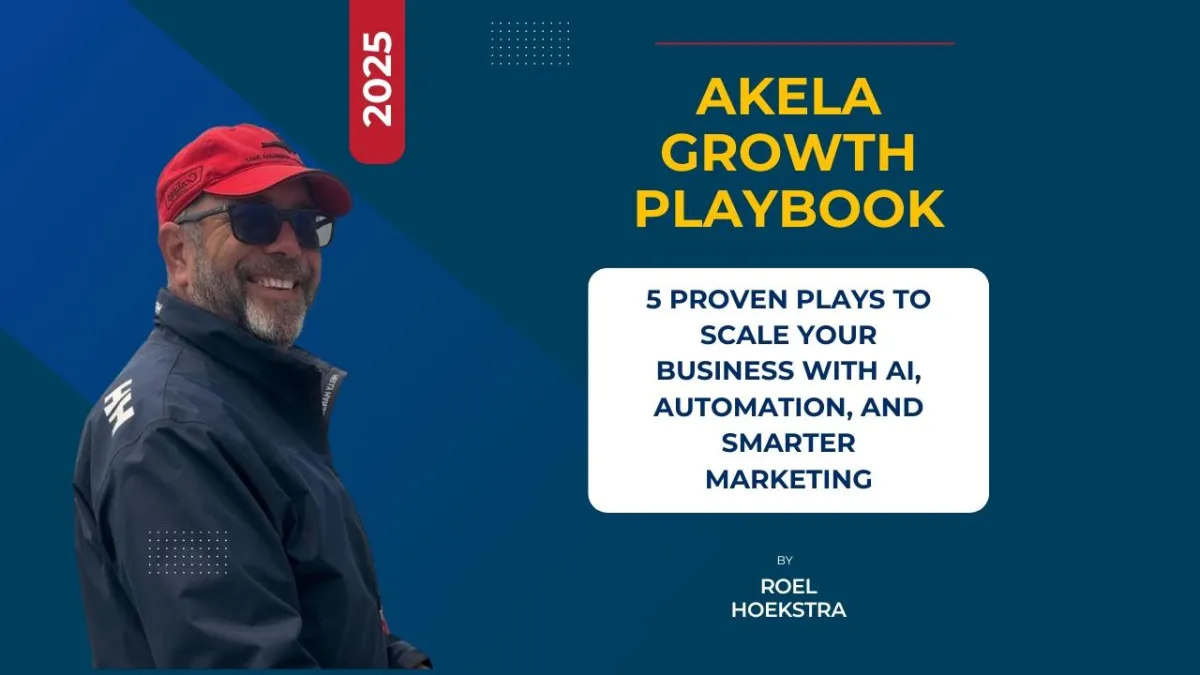
Get the Akela Growth Playbook - FREE
5 Proven Plays to Scale Your Business with AI, Automation, and Smart Marketing
The Akela Growth Playbook distills decades of business experience into simple, repeatable strategies for growth. We merge intuition with data, and human creativity with AI automation, to help entrepreneurs and business leaders scale faster without burning out.
What you'll learn:
How to stop missing leads and never lose a prospect again.
The simple automation that frees up 10+ hours a week
A step-by-step play to turn traffic into booked appointments.
Free access to the Digital Wolfpack.
Plus, Get Full Access To The Digital Wolfpack
Run with a pack, grow with a system
The Digital Wolfpack is a community of entrepreneurs and business leaders who don’t run alone. We share wins, test strategies, and hold each other accountable while implementing the Akela Growth Playbook. Together, we learn, grow, and dominate our markets with AI and automation as our edge.
Blog Posts To Drive Growth
AI Driven Data Analysis
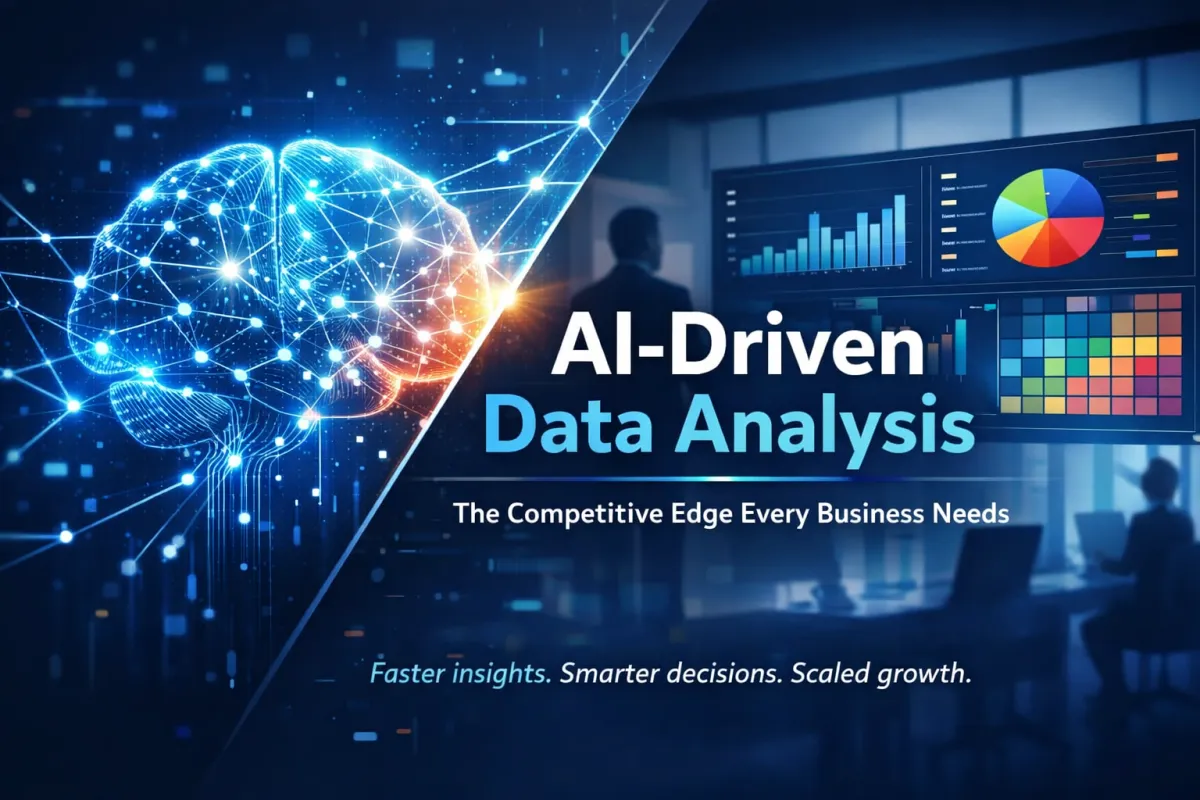
Why AI-Driven Data Analysis Is Becoming a Business Essential
Modern businesses generate enormous amounts of data from sales systems, customer interactions, operations, and digital platforms. For business leaders, the challenge is no longer collecting data—it’s turning that data into timely, useful insight. Artificial intelligence (AI) and machine learning are now central tools for companies that want faster analysis, cleaner data, and better decision-making at scale.
Instead of relying solely on manual reporting or static dashboards, organizations are using intelligent systems to automate data processing, detect patterns, and surface insights that would otherwise remain hidden.
What This Means for Business Leaders
AI-driven data analysis allows companies to move from hindsight to foresight. Rather than asking “What happened last quarter?”, teams can ask “What’s likely to happen next—and what should we do about it?”
Key Takeaways for Decision-Makers
● AI reduces the time spent cleaning, organizing, and preparing data
● Machine learning identifies trends humans often miss
● Automated analysis supports faster, more confident decisions
● These tools scale as the business grows, without linear increases in cost
Where AI Adds the Most Value in Data Processing
AI and machine learning are especially effective at handling tasks that are repetitive, time-consuming, or too complex for traditional rules-based systems.
Common business applications include:
● Automating data entry, categorization, and validation
● Identifying anomalies such as fraud, errors, or unusual behavior
● Forecasting demand, revenue, or customer churn
● Personalizing reports and dashboards for different teams
Instead of replacing analysts, AI augments them—freeing skilled employees to focus on interpretation, strategy, and action.
A Practical How-To: Adopting AI for Data Analysis
Businesses don’t need to overhaul everything at once. Successful adoption usually follows a simple progression.
Step-by-step checklist:
1. Identify a data-heavy bottleneck (reporting delays, forecasting errors, manual cleanup)
2. Start with a single, well-defined use case
3. Ensure data quality before applying automation
4. Pilot an AI tool alongside existing processes
5. Measure outcomes and refine before expanding
This incremental approach reduces risk and builds internal confidence.
AI vs. Traditional Data Analysis: A Comparison

For growing organizations, the difference becomes more pronounced as data volume increases.
Building Deeper Understanding Through Education
For business owners who want more control and insight into how these systems work, formal education can play a valuable role. Earning a computer science degree helps clarify how algorithms, data structures, and machine learning models actually operate behind the scenes—making it easier to evaluate vendors, manage technical teams, and avoid costly mistakes. Many leaders choose to earn a computer science degree online because it allows them to deepen their understanding of AI while continuing to run their business day-to-day.
Common Business Pitfalls to Avoid
Even with strong tools, results can disappoint if expectations aren’t aligned.
● Assuming AI works without clean data
● Treating AI insights as unquestionable truth
● Ignoring change management and employee training
● Over-investing in complexity too early
AI performs best when paired with human judgment and clear business goals.
Frequently Asked Questions
Is AI only for large enterprises?
No. Many AI-powered tools are designed specifically for small and mid-sized businesses.
Do companies need in-house data scientists?
Not always. Many platforms abstract complexity, though internal expertise improves results.
How long does it take to see value?
Simple use cases can deliver measurable improvements within weeks.
Is AI replacing analysts?
No. It changes their role from manual work to higher-level analysis and decision support.
Final Thoughts
AI and machine learning are no longer experimental technologies—they are practical tools reshaping how businesses process and analyze data. Companies that adopt them thoughtfully gain speed, clarity, and competitive advantage. The most successful organizations combine intelligent systems with human expertise, using each where it performs best. Over time, this balance turns raw data into a reliable engine for growth.


